Doing data centers differently
The issues below decide whether a data center project gets approved, how fast it gets built, and what its operator inherits. Conventional practice treats these issues as costs of doing business. We treat them as design requirements, resolved up front.
Who pays for power
HowPower strategyGrid costs of serving large new loads pushed onto ratepayers.
We bring our own capacity and energy: new renewable supply paired with battery storage.
Grid impact
HowPower strategyLarge new loads adding demand at peak hours, driving capacity payments, system upgrades, and congestion costs.
Flexible load: the campus draws when the grid can easily supply it and backs off when grid load is high, raising the capacity factor of transmission infrastructure customers already pay for.
Water
HowWaterEvaporative cooling consuming millions of gallons.
Closed-loop cooling, filled once and recirculated, with ongoing water use comparable to an office building.
Backup power
HowPower strategy · Inside a Lighthouse campusDiesel generator operation for testing and emergencies, with localized air pollution and intense noise.
Battery energy storage replaces bulk diesel backup, removing its noise and its emissions.
Noise
HowNoiseCooling fans at the property edge, pointed at homes; walls added after the fact help little, because low-frequency hum bends over barriers.
Quiet by design: no bulk diesel, closed-loop cooling with no evaporative fans, buildings placed by distance rather than by parcel edge, and performance designed to meet or exceed local noise standards at the property line, verified by boundary testing.
Deals and transparency
HowAccountabilitySecret deals, confidential power contracts, and fast-tracked approvals.
Formal community benefits agreements with measurable, enforceable outcomes, public dashboards, and grievance mechanisms with clear response timelines.
What the community keeps
HowAccountability · For CommunitiesOne-time deals, and few permanent jobs relative to the footprint while the community carries the externalities.
A durable property tax base, local hiring and training, community-directed funds, digital inclusion investments: the connectivity, skills, and access that let residents share in the digital economy this infrastructure serves, and infrastructure funded privately, with no burden on local taxpayers.
Five siting rules we do not break:
- Respect the proposed neighborhood.
- Select an entry and exit that does not disturb the neighborhood.
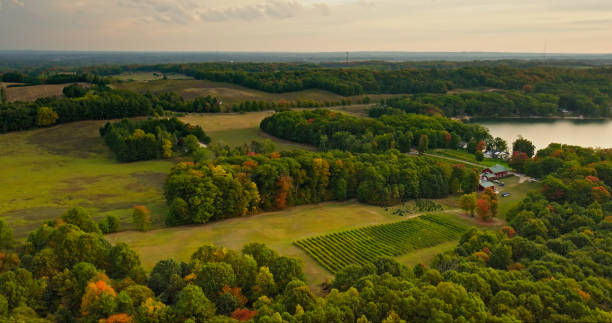
- Select master-planned sites with natural barriers.
- Grant conservation easements and build out of sight.
- Build so you can’t see it, can’t hear it, and can’t smell it. You just benefit from it.
 iStock #1780658998 · comp — not licensed